Hooked on Phonics Learning — a genuine systematic-phonics engine drilling 2 of reading’s 5 pillars, cancel button hidden
Free 7-day trial then an auto-renew subscription (up to $79.99/yr) + a Practice-Pack upsell. Systematic phonics that genuinely teaches decoding — but thin on comprehension, an arcade that hijacks lessons, and a documented cancel-maze.
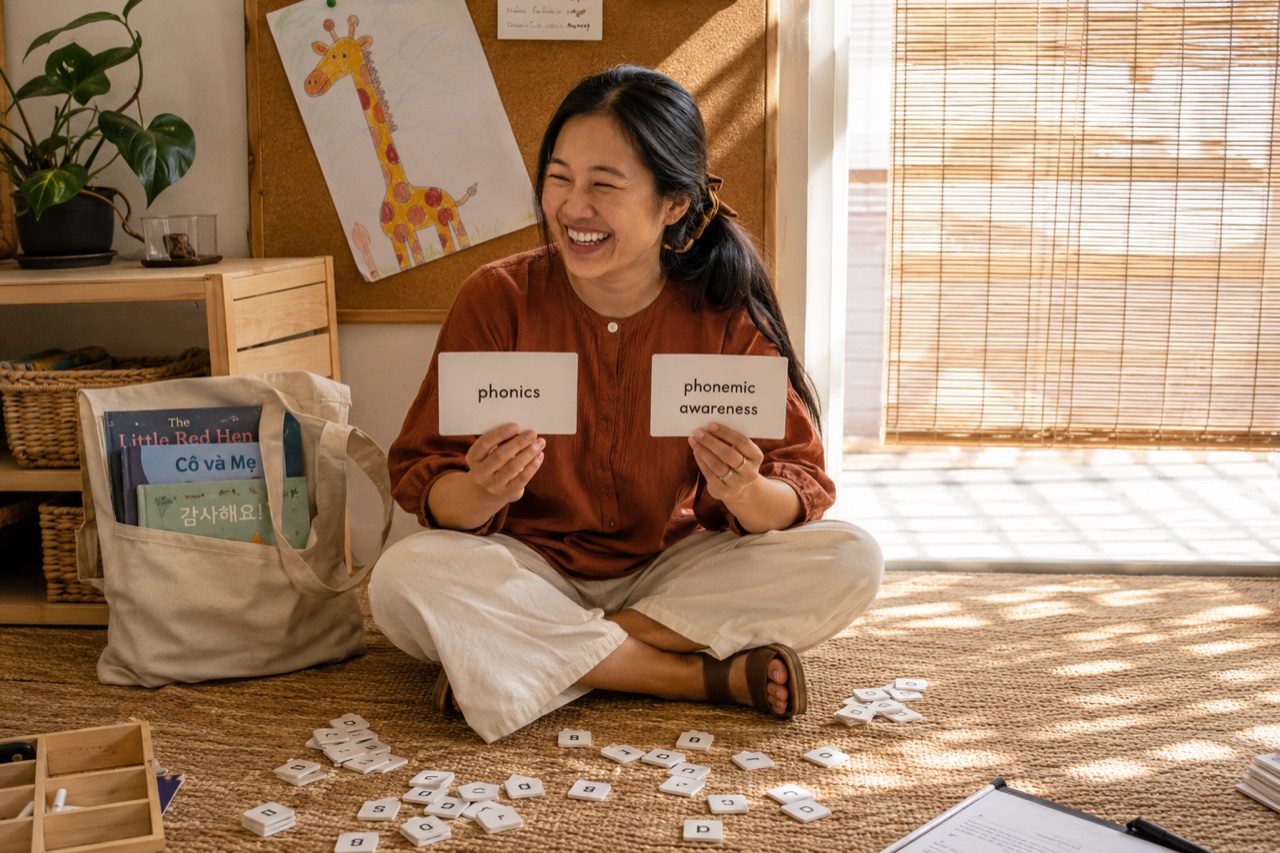
Hooked on Phonics Learning (Hooked on Phonics LLC; brand first marketed 1987, acquired by Sandviks 2011). A systematic, sequential synthetic-phonics program for ages 3-8: 1000+ activities, a 100+ ebook library, adaptive placement, plus mailed Practice Packs (paid add-on). Free 7-day trial then an auto-renew App Store subscription (to ~$79.99/yr). Rated 4+, no ads, 4.5★ of 16,859. Thesis (Linh): the curriculum claim is largely REAL — the mechanic is genuine systematic phonics that builds decoding (a 4-year-old reading full stories, an 8-year-old passing a state reading test). The seam: the program’s own "five pillars" page names phonemic awareness, phonics, fluency, vocabulary, comprehension — the app drills the first two and leaves the rest to books + an adult, so it builds decoders, not finished readers. Secondary cons: an arcade that hijacks lessons, a placement bug, letterform nits, and a subscription/cancel dark pattern (a 1994 FTC settlement, yet it still leads with "Guaranteed").

How we got to 67
Safety < 60 — flagged for parental discretion.
The Play Score is a weighted average: Fun ×0.25, Learning ×0.3, Safety ×0.25, Value ×0.2. Anything below 60 on Safety caps the total at 70.
What parents wrote vs. what their kids did
Quotes are sourced from public App Store, Google Play, and Reddit reviews captured during research. Reviewer handles shown verbatim where the platform makes them public; we never invent quotes or named children.
"We have so enjoyed watching our now almost-5 year old son become a reader during quarantine using only this App and the related practice packs mailed to us. He went from reading words like ‘cat’ and ‘mat’ in March to reading full stories from our shelf."
App Store — jamiemclev (5★, "We have a reader!!")· App Store"The app features an arcade-style game section that sucks up young kids’ attention. Once my child found it, it was game over for the reading lessons. Furious I paid for a year subscription. Educational apps should not be full of distractions."
App Store — salvatore Cipolla (1★, "Slop disguised as education")· App Store"It jumped my kid all the way to section 12 while she should be in 8. So every time we open the app it keeps jumping back to the 12 and I have to swipe back to the correct one. Beyond the new (bad) interface the content is great and really helping to keep her on pace."
App Store — bent0612 (3★, "I hate the update")· App Store"My 8 year old son has been using since kindergarten. He’s in second grade and passed his iread3 state test on the first try. I believe the foundations from hooked on phonics made that possible. My son was able to read in first grade!"
App Store — Glam Nurse (5★, "It works!")· App Store"I decided to download the Hooked on Phonics app since it was just $1 for the first month. I was a bit skeptical at first about the claims they were making that my son would be reading in a month. But to my amazement within three weeks he was reading."
App Store — Pimpinsan (5★, "Reading in 3 weeks")· App Store"The app features an arcade-style game section that sucks up young kids’ attention. Once my child found it, it was game over for the reading lessons. Furious I paid for a year subscription. Educational apps should not be full of distractions."
App Store — salvatore Cipolla (1★, "Slop disguised as education")· App StoreWhat's good, what's not
- ✓The curriculum claim is largely real: the mechanic is "systematic phonics and scaffolded stories to teach letter–sound correlations." CSM confirms kids "build knowledge according to a logical progression." It targets decoding, and it teaches it.
- ✓The outcomes parents report are concrete, not vague: a 5-year-old where "within three weeks he was reading," an 8-year-old who "passed his iread3 state test on the first try," and an autistic, nonverbal granddaughter who after months is "reading and getting everything right."
- ✓It is genuinely sequential and adaptive: "our adaptive program targets where each child needs practice," with 1000+ activities and a 100+ ebook library spanning preschool to 2nd grade. A 4-year-old "went from reading words like ‘cat’ and ‘mat’... to reading full stories."
- ✓Privacy is clean of the worst pattern: the App Privacy label has no "Data Used to Track You" category at all — no cross-app tracking on a kids’ app, and no ads in the app. The data it links to identity is "Contact Info" for the account, not an ad-network footprint.
- —Contrarian: it teaches decoding, not reading. HOP’s own page lists five pillars — "Phonemic Awareness, Phonics, Fluency, Vocabulary, Reading Comprehension" — but the app drills the first two; the other three lean on books and an adult. "Guaranteed" overstates it.
- —The subscription is a documented dark pattern: the 7-day trial "becomes a monthly subscription" that "automatically renews," and parents report having to "jump through hoops just to cancel," and "trying to cancel for months" hitting "a page that shows as an error."
- —Design choices fight the instruction: an "arcade-style game section that sucks up young kids’ attention," where "it was game over for the reading lessons," and an update that "jumped my kid all the way to section 12 while she should be in 8."
- —Two letterform problems hit emergent readers: "you cannot differentiate between a capital I and a lowercase L within this software," and the lowercase "a" switches shape between app and books. CSM adds the repetition can "feel tedious."
- —Value is poor and rented: no buy-once option, a price ladder up to $79.99/yr plus a Practice Packs upsell. A parent’s blunt take: "the pricing model for this app is scummy... You are renting software with no option to buy." And the in-app settings aren’t adult-lockable.
What your kid is actually practising
This is the core mechanic and where the app is strongest: explicit, systematic grapheme–phoneme correspondence taught in a fixed sequence — "systematic phonics and scaffolded stories to teach letter–sound correlations." CSM confirms kids "build knowledge according to a logical progression," and parents report children decoding within weeks. The practice genuinely targets the alphabetic principle.
Decoding is two of the five pillars HOP itself names ("Phonemic Awareness, Phonics, Fluency, Vocabulary, Reading Comprehension"). The app is thin on the comprehension/vocabulary/fluency end — a parent finds it "unclear if the expectation is that she can independently read" the end-of-unit books — so it builds decoders; finishing the reader still needs real books and an adult.
The program leans hard on recall: letter–sound associations, blending patterns, and a sight-word bank reinforced through deliberate repetition across 1000+ activities and the ebook library. CSM notes the "lots of repetition in activity type" — which is exactly the retrieval practice that moves grapheme–phoneme mappings into automatic recall.
The 20-minute, level-gated lessons ask for sustained, sequential focus, and many parents report children staying with it daily over months. But the reward layer undercuts it: an "arcade-style game section... sucks up young kids’ attention," and once a child finds it, "it was game over for the reading lessons" — so the attention the lessons build, the games can scatter.
A healthy way to play it
About 20 minutes per session